The golden fish in the old tale would make a terrible couples therapist: it grants wishes without once asking what anyone actually needs. When one partner keeps raising the stakes and the other quietly gives in, it helps to look at the conversation before the trough breaks.
Where the story begins
Remember how the tale of the golden fish ends? With a broken trough. Read as a story about a family rather than a punishment for greed, it describes a pattern I see in my practice every week: he endures in silence, she demands and seethes, and neither is happy. How does this arrangement keep itself going? Why is there no single leap out of it? And who, exactly, is the fish?
A fairy tale that you live without reading
Eric Berne, the father of transactional analysis, argued that each of us has a life script—a program written in childhood under the influence of our parents, which then subtly guides the most important decisions of adult life. We think we're choosing, but we're actually playing out the play we were cast in when we were five. Folk tales have lived for centuries because they are collective summaries of the most common scenarios.
And we will clear up the misunderstanding right away, because he is being pulled from school. The story about the fisherman, his wife and the wish-fulfilling fish is neither Russian nor Pushkin. This is an international story type, in the Aarne-Thompson-Uther index it has number 555. The Grimm brothers printed it as early as 1812 under the title "About the Fisherman and His Wife" from a Low German manuscript by the artist Philipp Otto Runge; Pushkin took this text and translated it in his own way as early as 1833 - in his draft, the old woman, like the Germans, demanded to make her the Pope. The same framework is at work in the Japanese "Stone Man," where a man successively wishes to become rich, a prince, the sun, a cloud, and a mountain—and returns to where he started—and in dozens of other national versions. That is, before us is not a literary work of one author, but the structure of the human psyche, recorded by folklore independently in different parts of the world. That is why she is so comfortable in the office: the client recognizes her instantly, without any theory.
Take a professional look at this family. The old man has been fishing for thirty-three years, patient, silent, and when he gets a miracle capable of fulfilling any wish, he does not make any of his own. He runs to the sea as a courier of other people's claims. Old woman - demands, quarrels, raises the stakes: trough, house, nobility, kingdom. Note: no granted wish keeps her happy for more than a paragraph. And Rybka is the only character who does only what he has decided, calmly says "no" when the limit has been crossed, and does not take offense at the storm (the storm is already consequences, not hysteria).
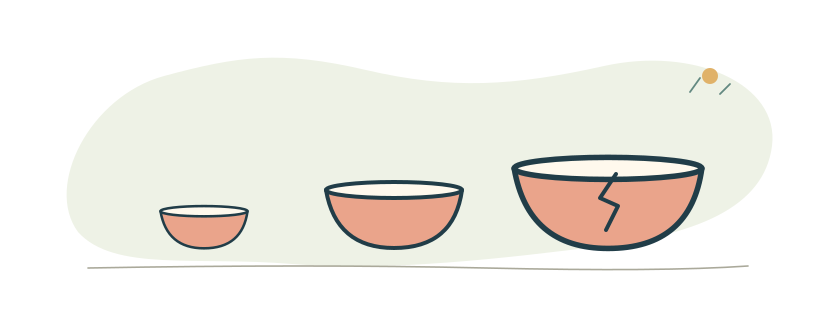
Three characters are not three people. These are three levels of maturity, three ways of dealing with one's own desires and other people's demands:
The old man is helplessness. He endures, makes excuses, swallows insults. He "doesn't have" his desires (in fact, he forbade himself to have them). Pseudozen, which is surrender.
▼ integration of aggression ▼
The old woman is demanding. There are desires, but others must satisfy them. Claims, sanctions, control. There is a lot of energy - zero happiness, because the source is always outside.
▼ letting go of the need to demand ▼
Golden Fish - autonomy She knows her wishes and fulfills them herself. He fulfills other people's requests of his own free will, and not out of fear or guilt. Knows how to say "no" without a storm inside.
And the main law of this ladder, which I explain to clients every time: you can't jump over a rung. The old man cannot become a Fish by bypassing the Old Woman - first the psyche must regain the right to aggression, demand, "no". And the Old Woman will not become a Fish without passing through the territory of the Old Man - humility, withdrawal of claims to the world, recognition that others are not obligated. Whoever tries to jump falls back to the broken trough.
The same roles under different names
When I show this ladder in the office, clients almost always recall a couple more stories—and they're right. Roles wander from fairy tale to fairy tale, changing costumes:
Kolobok is an old man who managed to escape
The most underrated character of all folklore. Kolobok is a man who, instead of tolerating or demanding, simply rolled off the windowsill and went to live his highs: "I ran away from my grandmother, I ran away from my grandfather." It is an escape instead of autonomy — a pseudo-exit that at first glance looks like freedom. A client in such a position changes cities, jobs and partners, sincerely considering himself free, but in reality he simply cannot stand the second step - a direct conflict. The finale is known: the fox eats not the weakest, but the most talkative and self-confident. By the way, the plot is also international — the English Gingerbread Man, the Norwegian pancake, the runaway American pie: type 2025 by the same pointer.
Grandfather, grandmother and chicken Ryaba
Another scene of the same theater, only shorter. The hen laid a golden egg - grandfather beat, grandmother beat, they did not break; the mouse waved its tail - it crashed; both are crying. The miracle came - and it was met in the only way they know: they tried to hit. And when it disappeared, they sat down to sob. In the office, it looks like this: a person is finally offered something that he has wanted for years (a position, a relationship, a move), and he finds forty reasons why it is "not the one", and then mourns for a long time for the lost opportunity.
"Mother Holle", "Frost" and other exams
Here is the same trinity, but with pedagogy: one girl works, the other demands — and each gets exactly what she deserved by behavior, not by status. What is important for us: in these fairy tales, the award is given by a third figure — the same autonomous authority that does not owe anything to anyone and acts according to its own rules. For fishermen it is a fish, for Germans it is Mrs. Metelitsa, for Slavs it is Frost. The role is one: the one who is responsible only for his own decision.
What the research says
A skeptic will say: nice metaphor, but where is the evidence? Here's where
The couple "requirement - suspension". What our fairy-tale couple does is called the demand-withdraw pattern in science: one partner presses and criticizes, the other remains silent and disappears. Andrew Christensen and Christopher Heavey showed as early as 1990 that this pattern is one of the most reliable predictors of relationship dissatisfaction, and that those who need change are more likely to demand change, and those who are content with the status quo are more likely to withdraw. And in 1998, Sagrestano and his colleagues clarified the main thing: the role of the "Old Woman" turns out to be not gender, but position. It is not the one who is stronger who demands it, but the one who needs change and who has no other way to get it. From the side, it is read in the opposite way: the one who presses is the one in the pair and the main one. In fact, pressure is a sign of the opposite. The one who has real leverage — money, status, a quiet opportunity to get out — doesn't demand or scold, he just does it his way or silently withdraws. Therefore, a claim is not a demonstration of force, but a substitute for it. Let's remember this, it will still be needed.
Helplessness of the Old Man. Martin Seligman discovered "learned helplessness" half a century ago: dogs that were electrocuted with no way to escape would stop running even when the door was opened. And in 2016, Seligman and Steven Mayer published a revision of their own theory — and it turns everything upside down: passivity does not learn. Passivity is an innate, default response of the brain to prolonged uncontrollable stress. It learns just the opposite - control: the prefrontal cortex has to learn from its own experience that "my actions make a difference", and then it inhibits the ancient freezing program. I translate from neuroscientific: The old man in each of us is a factory setting. The fish must be raised. Synapse after synapse, "no" after "no".
The people who achieve something in this world are the ones who get up and look for the right circumstances. And if he doesn't find them, he creates them himself.
- Demand
- “You never care about me” takes the place of “I miss spending time together.”
- Concession
- One partner agrees to end the argument while quietly resenting it.
- Another round
- The concession leaves the need unspoken. The ground is set for the next demand.
— George Bernard Shaw, Mrs. Warren's Profession
What keeps the broken-trough cycle going
Why has this merry-go-round been spinning for decades and no one gets bored enough to get off? Because everyone receives their psychological "salary". The old woman's demand relieves anxiety and for a moment she feels power. The old man uses excuses to buy himself the status of "I'm good, she's like that" and avoids the most terrible thing - conflict. The exchange took place, everyone is at their own pace, the neurosis is satiated. The scheme is as follows:
1. Claim: "You again...! Go back to the fish, you fool, bow down!”
2. Excuses or silent execution: "Well, I wanted as much as possible... I'm already running"
3. A short lull. Both exhaled. It seems to have passed
4. Famine returns — and the rate rises: there was a trough, it became a kingdom
5. The system overheats → storm → broken trough. And in a circle
Note the pitfall: Complying with a requirement doesn't stop the cycle—it accelerates it. The old man sincerely believes: I will do this again, and she will finally calm down. Don't calm down. Because she is not asking for a trough - she is asking for what the troughs do not give: a sense of self-worth, contact, security. Feeding such hunger with things and concessions is like extinguishing a fire with gasoline: the flame gratefully accepts and asks for more.
Stories from the consulting room
The cases are depersonalized and composed of several real stories: the details are changed beyond recognition, the mechanisms are real.
Case one: a man who always turns out to be guilty
Aytivets, in his thirties, in a relationship for many years. The wording of the request is beautiful in its precision: "I come out of any conversation guilty. With my wife, with my mother, with anyone." A week without conflicts happened to them only when they worked with their partner in different shifts - more eloquent than any diagnosis. He responded to every challenge with the Old Man's classics: a detailed report, an excuse, a poker face, and — signature — "it's okay." And then for weeks he carried the offense like a stone in his pocket. The root was quickly found: conversations with his mother, after which he also "turned out to be guilty" at the age of twelve. The script was not born in marriage - it moved there, like an old closet when moving.
They worked behind a ladder. First, three things are taboo: not reporting, not making excuses, not apologizing "for prevention." Instead of an explanation, there is a fixation of the fact and a counter question: "Do you now want to spoil our evening or solve the problem?" The first time his voice trembled, he says, like on a driving test. But the conflict, which previously consumed an hour of explanations and three days of silence, ended in two minutes. A few months later, he brought to the session a phrase that I wrote down: "It turns out that when you don't make excuses, they start making excuses for you." The ladder works.
Case two: a woman on two chairs at once
And here is a case that breaks the stereotype, as if the Old Man is always a man, and the Old Woman is a wife. The client is successful, intelligent, with anxiety and bouts of apathy. An interesting geometry is revealed: in front of her own mother, she is one hundred percent Old Man. Anxiety the day before the call, inability to refuse, guilt for every "didn't make it". And at home, with her husband, the same woman is the Old Woman: she presses, gets annoyed, demands - and demands with hints and displeasure, because the script forbids directly asking "hug me, I'm tired". Roles are not character or gender. These are positions, and one person can occupy different positions on different chessboards. And here what we agreed to remember will come in handy: it is not the stronger who demands, but the one who needs change and who has no other way to get it. She didn't have any leverage in front of her mother - no demand there ever worked, so she had to endure. There were levers at home, but she didn't know how to use them directly - and instead of a direct "I need your attention" there were irritations and hints. The same deficiency, only with different consequences: there he made her an Old Man, here an Old Woman.
Work went on both sides at the same time. In the direction of the mother - the cultivation of the "Old Woman" in a good sense: the right to "no" without a five-act excuse. In the direction of the man — on the contrary, the descent from requirements to direct requests: four steps — he noticed irritation, called a real need, a pause, a question instead of a claim. The first "mom, no, I won't come this Saturday" was more difficult than defending the diploma. The world did not collapse. Mom sulked for two days and — surprise — started asking, not ordering. And the man once said: "You have become simpler. It became easy with you." In her coordinate system, it was the biggest compliment in years.
Practices: how to climb a ladder, not jump
The specifics with which we start in the office — and which can partially be done independently before it burns out.
Define your step - honestly and by zones. Not "who I am", but "where I am with whom". With a partner, with parents, with a boss, with children. You will be surprised: almost no one sits on the same step everywhere. The map of positions is already half of the diagnosis.
To the old: a week-long taboo for excuses. Seven days of not explaining, not reporting, not apologizing where it is not your fault. For a rebuke - fixing the fact ("yes, I bought exactly this bread") and a full stop. It will be unbearably itchy — that's normal, it's a script break.
Old people, level two: one "no" per day. Small, household, safe: for a waiter, a colleague, an advertising call. Remember neuroscience? Control is a learned skill. The prefrontal cortex needs evidence that your actions are making a difference. Carry evidence to her every day like a cat of mice.
To old women: translate claims into the language of desires. The rule is simple: behind every "you don't..." hides "I want...". Catch the claim before departure and rephrase it: not "you don't care about me!", but "I want half an hour of your attention today." Yes, it sounds vulnerable. This is the point: a claim is the armor under which a request suffocates.
To Old Women, Level Two: A day without any requirement. Twenty-four hours don't "owe" anyone anything. Whatever you want, you either ask directly (with the right of the other to refuse!), or you do it yourself. Many of my clients say after such a day that for the first time in years they felt not power, but peace. These are different things, and the second is more pleasant.
Both: Rybka's test. Before any action for another person, there is one question: "Am I doing it because I want to, or because I am afraid of the consequences of refusal?" If the second, you are still on the ladder. Not scary. The main thing is to know your step and direction.
It is easy to miss the cycle of "broken trough" from the inside: it seems that "everyone has it". For a sober perspective, take the CSI-16 Couple Test or the shorter RAS Relationship Satisfaction Scale, preferably both separately.
Who can try this, and who needs support first
Independent work according to the practices above is suitable if you recognize the pattern, the relationship is generally safe, and it is about the usual household carousel of claims and patience. Many couples pull out a lot themselves as soon as they see the mechanism - seeing is really half the battle here.
It is better first individually with a specialist, if: behind "patience" is the partner's fear, and not a habit; in the relationship there is humiliation, control of money and social circles, threats; your "Old Man" already gives somatics - pressure, insomnia, panic attacks, alcohol as a pain reliever; or you tried "just start saying no" and it got much worse after that. These are markers of the fact that the script is woven deeper and you should not pull the threads at random. Here's more about how passivity, aggression, and assertiveness are related, and why aggression has been locked down for an entire generation.
And finally, about the moral of the tale. It is usually read as a fable about greed punished. I read it differently: a broken trough is not a punishment, but an honest finale of any system, where one person orders wishes, another runs after them, and a third fulfills them. Rybka did not punish anyone. She simply stopped serving someone else's script - as Rybka should. I wish you the same. And the trough... buy a new trough. His own
Sources: Uther H.-J. The Types of International Folktales (ATU), types 555 and 2025; Grimm J. and V. Kinder- und Hausmärchen (1812), fairy tale #19; Propp V. "Tale Morphology" (1928); Bettelheim B. The Uses of Enchantment (1976); Berne E. What Do You Say After You Say Hello? (1972); Christensen A., Heavey C. L. Gender and social structure in the demand/withdraw pattern of marital conflict. Journal of Personality and Social Psychology, 59 (1990); Heavey C. L., Christensen A., Malamuth N. M. The longitudinal impact of demand and withdrawal during marital conflict. JCCP, 63 (1995); Sagrestano L. M., Heavey C. L., Christensen A. (1998) — on power as a demand driver; Maier S. F., Seligman M. E. P. Learned Helplessness at Fifty: Insights From Neuroscience. Psychological Review, 123 (2016).
This article is for information and does not replace an individual consultation with a psychologist.
Original article↗